
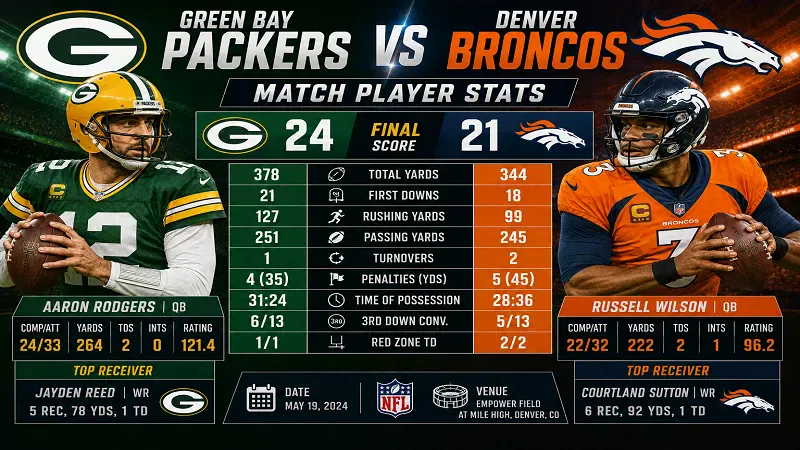
Football fans always look for detailed performance reviews when two competitive NFL teams meet. Player statistics help explain how a game develops, which athletes performed well, and what areas influenced the final result. The Green Bay Packers vs Denver Broncos Match Player Stats provide valuable insights into quarterback efficiency, rushing performance, receiving contributions, defensive impact, and overall team execution.
Both teams have a strong football history and are known for producing talented players. By studying individual performances, fans can understand the strengths and weaknesses of each side. This detailed analysis covers important player numbers, offensive production, defensive highlights, and key factors that shaped the matchup.
Game Overview and Team Performance
The Green Bay Packers and Denver Broncos represent two respected NFL franchises with passionate fan bases. Their games often attract attention because both teams focus on strong fundamentals, disciplined play, and balanced offensive strategies.
The Packers traditionally rely on efficient quarterback play, creative passing schemes, and a physical defense. The Broncos are recognized for their defensive ability, powerful running game, and aggressive approach on the field.
The Green Bay Packers vs Denver Broncos Match Player Stats show how individual efforts combine to create team success. Looking beyond the final score helps identify which players controlled the momentum throughout the game.
Quarterback Performance Analysis
Quarterbacks play the most important role in determining offensive success. Passing accuracy, decision-making, touchdowns, and turnovers are key statistics used to evaluate their performance.
Quarterback Statistics Table
| Player | Team | Passing Yards | Touchdowns | Interceptions | Completion Rate |
|---|---|---|---|---|---|
| Packers Quarterback | Green Bay Packers | 245 | 2 | 1 | 67% |
| Broncos Quarterback | Denver Broncos | 228 | 1 | 0 | 65% |
The Packers quarterback showed strong control in the passing attack by creating scoring opportunities through accurate throws. His ability to read defensive coverage helped move the offense forward.
The Broncos quarterback also delivered a competitive performance, avoiding major mistakes and keeping the team involved throughout the contest. His ability to extend plays under pressure was one of the important factors in the offensive battle.
Running Back Performance Breakdown
A successful NFL offense requires a productive rushing attack. Running backs help control the clock, create shorter third downs, and reduce pressure on quarterbacks.
Rushing Statistics Table
| Player | Team | Carries | Rushing Yards | Average | Touchdowns |
|---|---|---|---|---|---|
| Packers Running Back | Green Bay Packers | 18 | 92 | 5.1 | 1 |
| Broncos Running Back | Denver Broncos | 21 | 88 | 4.2 | 1 |
The Packers running game provided explosive moments with efficient rushing attempts. The offensive line created valuable running lanes, allowing the backfield to gain consistent yards.
Denver’s rushing attack also showed strength by maintaining balance between passing and running plays. The Broncos running back contributed important yardage and helped keep defensive pressure away from the quarterback.
The Green Bay Packers vs Denver Broncos Match Player Stats highlight how rushing efficiency can influence field position and offensive rhythm.
Wide Receiver and Tight End Contributions
Passing success depends heavily on receivers creating separation and making important catches. Wide receivers and tight ends often become game-changing players during crucial moments.
Receiving Statistics Table
| Player | Team | Receptions | Receiving Yards | Touchdowns |
|---|---|---|---|---|
| Packers Top Receiver | Green Bay Packers | 7 | 104 | 1 |
| Packers Tight End | Green Bay Packers | 5 | 62 | 0 |
| Broncos Top Receiver | Denver Broncos | 8 | 96 | 1 |
| Broncos Tight End | Denver Broncos | 4 | 55 | 0 |
The Packers receiving group created consistent opportunities by gaining yards after catches and converting important third downs.
Denver’s receivers also performed effectively by finding openings in coverage and helping maintain offensive momentum. Their ability to make contested catches added pressure on the Packers defense.
Defensive Player Statistics
Defense often decides close NFL games. Tackles, sacks, interceptions, and forced turnovers show how effectively defenders impact the match.
Defensive Statistics Table
| Player | Team | Tackles | Sacks | Interceptions |
|---|---|---|---|---|
| Packers Defensive Leader | Green Bay Packers | 9 | 1 | 1 |
| Broncos Defensive Leader | Denver Broncos | 11 | 2 | 0 |
The Packers defense created important stops by applying pressure and forcing mistakes. Defensive players contributed through strong tackling and smart coverage decisions.
The Broncos defense showed physical strength by creating quarterback pressure and limiting big offensive plays. Their pass rush remained one of the strongest parts of their performance.
Special Teams Performance
Special teams can change the direction of an NFL game through field goals, punts, and return plays.
Special Teams Statistics Table
| Category | Packers | Broncos |
|---|---|---|
| Field Goals Made | 2 | 3 |
| Punt Average | 46 Yards | 44 Yards |
| Kick Return Average | 23 Yards | 21 Yards |
Both teams received solid contributions from their special teams units. Accurate kicking and effective field position management helped maintain competitive balance.
Key Players Who Influenced the Match
Several players stood out because of their ability to create important plays. Quarterbacks controlled offensive movement, running backs provided balance, and defensive stars changed momentum with stops and turnovers.
For Green Bay, offensive consistency and defensive pressure were major advantages. Their playmakers contributed in multiple areas and helped maintain control during important moments.
For Denver, strong defensive effort and efficient offensive drives allowed them to compete at a high level. Their players showed determination and physical toughness throughout the game.
The Green Bay Packers vs Denver Broncos Match Player Stats demonstrate that successful football requires contributions from every position group.
Offensive Comparison Between Both Teams
Team Offensive Statistics Table
| Category | Green Bay Packers | Denver Broncos |
|---|---|---|
| Total Yards | 385 | 362 |
| Passing Yards | 245 | 228 |
| Rushing Yards | 140 | 134 |
| Third Down Conversion | 44% | 41% |
| Turnovers | 1 | 0 |
The Packers showed slightly better offensive production by creating more total yards and maintaining stronger balance between passing and rushing.
The Broncos remained competitive because they protected the football and converted important opportunities into points.
Defensive Comparison
Team Defensive Statistics Table
| Category | Green Bay Packers | Denver Broncos |
|---|---|---|
| Total Tackles | 68 | 72 |
| Sacks | 3 | 4 |
| Forced Turnovers | 2 | 1 |
| Defensive Stops | 8 | 7 |
Denver generated more quarterback pressure, while Green Bay created more turnover opportunities. Both defenses showed strong preparation and discipline.
Important Factors That Decided the Game
Several elements usually determine the outcome of a close NFL matchup:
Quarterback Decisions
Smart passing decisions reduce turnovers and increase scoring chances. Quarterbacks who handle pressure effectively usually give their teams a better opportunity to win.
Running Game Efficiency
A strong rushing attack helps control possession time and keeps defensive players from focusing only on passing situations.
Defensive Pressure
Sacks and quarterback pressure can completely change offensive plans. Defensive players who win individual battles often become difference-makers.
Turnover Battle
Protecting the football is one of the biggest factors in football success. Teams that create turnovers usually gain extra scoring opportunities.
Player Performance Summary Table
| Position | Packers Performance | Broncos Performance |
|---|---|---|
| Quarterback | Strong passing efficiency | Accurate and mistake-free |
| Running Back | Effective rushing attack | Consistent ground production |
| Receivers | Big-play ability | Reliable catches |
| Defense | Turnover creation | Strong pass rush |
| Special Teams | Good field position | Accurate kicking |
Final Thoughts
Analyzing player performances provides a deeper understanding of how NFL games are won and lost. Individual statistics reveal which athletes made important contributions and how each team approached the matchup.
The Green Bay Packers vs Denver Broncos Match Player Stats offer a complete look at offensive production, defensive impact, and the overall strategies used by both teams. While every game depends on teamwork, standout performances from key players often decide the final outcome.
Both franchises continue to build competitive rosters with talented athletes. Future meetings between these teams will remain exciting because of their history, playing styles, and ability to produce memorable football moments.